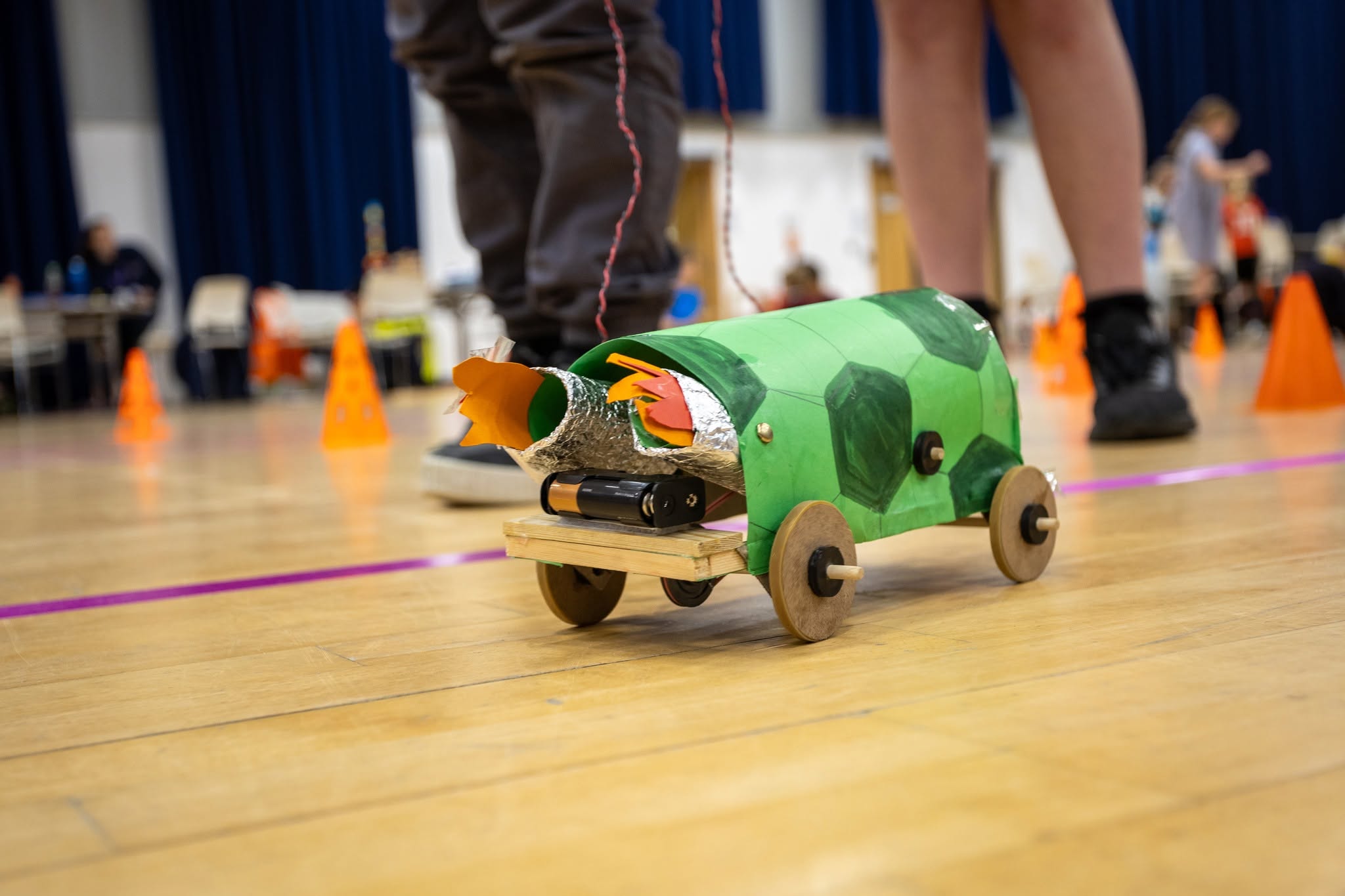
More than 1,000 school pupils benefited when East Midlands Freeport partnered with Primary Engineer to deliver the Primary Engineer Vehicle Programme across 20 regional schools.
The project gave primary-school pupils across the East Midlands Freeport region practical experience of engineering. It equipped teachers with STEM training, supplied classroom vehicle-building kits and connected schools with engineering professionals.
Project purpose
East Midlands Freeport wants to help create inclusive routes into the region’s future engineering, manufacturing, logistics and technology workforce.
To achieve this, early access to practical STEM learning is important because it helps children understand what engineering is, build confidence in problem-solving and see engineering as a possible future career.
The Freeport therefore identified an opportunity to support schools across the three counties through the Primary Engineer Vehicle Programme.
The aim was to make engineering more accessible to pupils, strengthen teachers’ confidence in delivering STEM subjects, and connect classrooms with local industry.
What did East Midlands Freeport do?
East Midlands Freeport funded and enabled the delivery of the Primary Engineer Vehicle Programme in 20 primary schools.
Support included:
- Teacher CPD training to build confidence in delivering practical engineering and STEM activities.
- Resources for each school to run up to 30 vehicle-building projects across two classrooms.
- Hands-on activities in which pupils designed and built shoebox and motorised vehicles in pairs.
- Links between participating schools and engineering professionals from regional employers including Rolls-Royce, Rolls-Royce SMR, Eviosys, National Highways, National Grid and Rockwell Automation.
- In-school celebration-event kits, including co-branded certificates, medals, hats and delivery guidance.
The programme was designed to help pupils learn through designing, testing, improving and collaborating – the same problem-solving process used by engineers.
What did the project achieve?
The East Midlands Freeport-funded programme reached 1,033 pupils across 20 schools in its first year.
Key results included:
- All teachers reported an increased understanding of engineering.
- All teachers said they saw the value of engineering in the curriculum for pupils’ education and future working lives.
- All teachers reported greater confidence in teaching science, maths, engineering, and design and technology.
- All teachers said pupils had a better understanding of engineering and its importance.
- All teachers said the programme strengthened careers-related learning in their school.
- All participating schools said they felt supported, would recommend the programme and wanted to take part again.
- Reaching schools where 19.7% of pupils were eligible for free school meals – helping widen access to STEM learning and future career opportunities.
- Participation being split evenly between boys and girls at 50% each.
The Primary Engineer partnership helped East Midlands Freeport turn its commitment to skills, inclusion and community benefit into a measurable local outcome.
By reaching children early, supporting teachers and bringing engineers into schools, the programme is helping build awareness of the careers that will support the East Midlands’ future growth.
Emma Chouhan, Skills and Communities Lead, East Midlands Freeport, said: “We want young people across the East Midlands to see engineering as creative, practical and open to them.
“Through our partnership, more than a thousand pupils have had the opportunity to design, build, test and improve their own vehicles, while teachers have gained the confidence and resources to make engineering part of classroom learning.
“This is about more than one activity in school. It is about building curiosity, confidence and problem-solving skills early, and helping children see the exciting opportunities that engineering can offer in the future.”